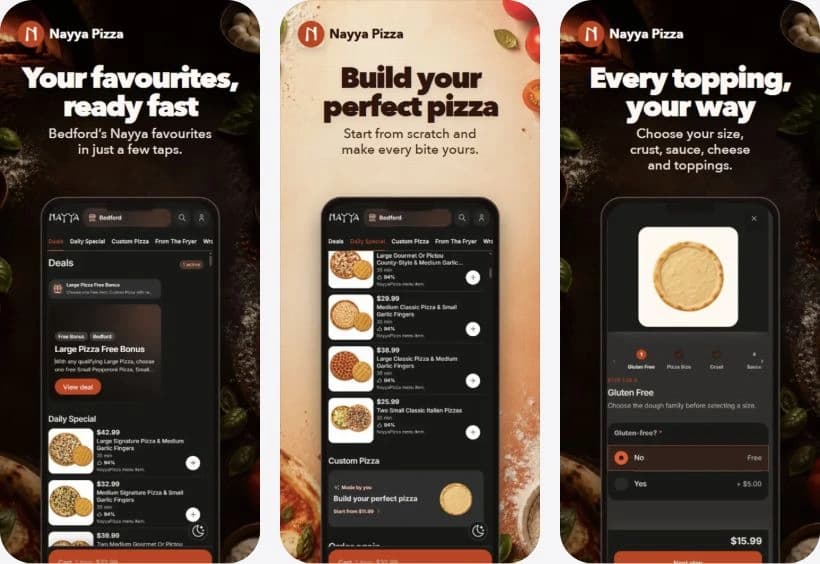
Nayya Pizza mobile app
Nayya Pizza customers can build a pizza, choose pickup or delivery and use rewards when they order on iOS or Android.
Our Dartmouth team designs and builds mobile apps for businesses across Canada. Bring us a task your customers or staff need to do on their phones. We’ll help you decide what the first release should do and how it will connect to the systems you use.
Nayya Pizza customers can build a pizza, choose pickup or delivery and use rewards when they order on iOS or Android.
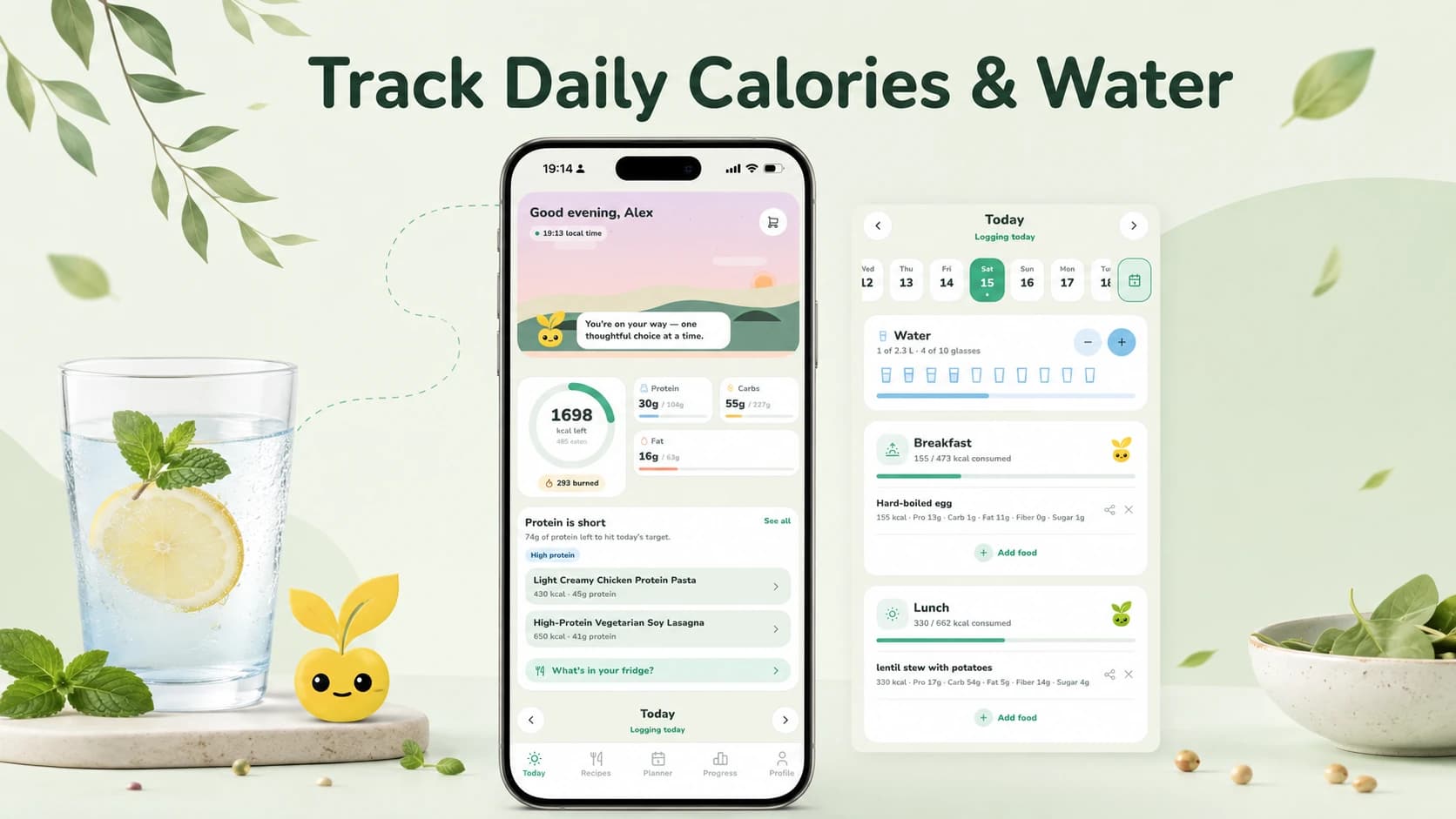
Mivee helps people log meals, track calories and protein, and find recipes that fit their diet. It is available on Android and on the web.
Start with one person and one task. A field technician might need to open an assigned job, attach a photo and record the work before leaving. A returning customer might need to pick a location, repeat an order and see when it will be ready. Those journeys call for different screens, permissions and connections.
An example from the way you work today is a good starting point. Walk us through the current steps and show us where someone has to make a call, copy information or start again. That gives us a concrete problem to design around and a way to judge whether the app solves it.
The devices your audience already uses should guide the build. An internal team using company-issued Android phones has a different starting point from a business serving customers on both iPhone and Android. We look at device features, connectivity and who will maintain the app when choosing a native or cross-platform approach.
Sometimes a mobile-friendly web application covers the task well. A customer booking an appointment from a link may value immediate access. Someone using a tool throughout a shift may also need camera access, saved work or notifications. We compare these needs with the cost of building and maintaining each option.
If customers only need a browser to complete the task, compare the scope of web application development.
Before development, we map the main journey and turn it into a clickable prototype. You can follow a task from the first screen to confirmation, try it with the people who do the work and decide where instructions or controls need to change.
We also design the less obvious moments. What should a technician see if a photo is still uploading? Can a customer edit a request after sending it? Answering those questions early helps define a useful first release and gives later features a clear place in the plan.
We identify which system owns each piece of information. For a booking app, that includes where available times come from, who can change an appointment and how staff see a cancellation. We review access to those systems and their interfaces before including integrations in the quote.
Device testing follows the same journeys. We check what happens when a connection drops, a permission is declined or a session expires. Before release, we agree who owns the store accounts, who handles support and which updates your team will need help with.
We quote the defined scope. The number of platforms, user roles, integrations and offline tasks all affect the work involved. Share the main journey and the systems it touches so we can separate the first release from optional features in your estimate.
Yes. If your first users are on a known set of devices, we can plan an iOS-only or Android-only release and document what a second platform would require.
Yes. We can review your screens, follow the main tasks and identify missing states or integration details before scoping the build. A prototype is also a useful way to show which decisions you have already made.
Tell us who will use the app, which task matters most, what devices they use and what the app needs to connect to. Include a target launch date or budget range if you have one. A short walkthrough of the current process is enough to start.